Getting there and the evening
Visiting Asakusa Kaguwa: what to expect
How to find the theatre, what your voucher time means, the hour before the dance, food, families and the stairs, plus Asakusa before or after.
Reserve your Kaguwa seats ↗Quick answer
Yes, it is an easy, joyful evening to plan. Take the train to Asakusa, find the entrance with the lanterns in the covered shopping street, and go up to the second-floor desk at your voucher time. Doors open an hour before the dance, so you have time for your drink, the photo booth and a chat with the dancers, then one hour of Japanese dance in kimono. Allow up to two hours in all.
How the night runs
| Moment | What happens |
|---|---|
| Arrive | At your voucher time, not before |
| Doors | Up the stairs to the second-floor desk |
| The hour before | Drink, photo booth, dancers mingling |
| The show | About one hour of Japanese dance |
| Afterwards | Photos with the performers |
| In all | Up to two hours in the building |
The evening in order
Everything about Kaguwa is built to be simple. You arrive at the time printed on your voucher, climb the stairs, check in at the second-floor desk and collect your drink. The hour before the dance is part of the fun, with a photo booth in the room and dancers who stop at tables to say hello. Then the music picks up and the dancers perform for about an hour in a range of Japanese garments. Afterwards you can pose with the performers again. In all, allow up to two hours in the building, which leaves time for dinner in Asakusa on either side.
Getting to Asakusa by train
Asakusa is served by several stations, so you can use whichever line you are already on. Asakusa Station has the Tokyo Metro Ginza Line, the Toei Asakusa Line and the Tobu Skytree Line, and the Tsukuba Express has its own Asakusa Station. From Tokyo Station it is about 20 minutes, using the JR Yamanote Line to Kanda and then the Ginza Line, and from Shinjuku about 35 minutes by the same change. Allow a few extra minutes the first time, because the streets around the temple are busy and the theatre is on the lantern-lit shopping street.
Finding the entrance
Look for the entrance with the lanterns in the covered shopping street, then go upstairs. The reception is on the second floor. The booking page carries a map link that opens the exact spot, which is the quickest way to find the doorway on your first visit. If you are walking in from Sensō-ji, give yourself a few minutes to pick out the lanterns among the other shopfronts. Staff are happy to help, so ask at the desk if you are unsure where to go once you are inside.
Your voucher time
The time on your voucher is when doors open, and the dance begins one hour after it. The theatre asks guests not to arrive before that time, so an early arrival only leaves you waiting on the stairs. There are two shows in the schedule, an earlier one and a later one, and the booking calendar shows which are open for your date. Being inside at least 15 minutes before the dance starts keeps the transition smooth, which is easy to do when you arrive on the voucher time, since you have a whole hour before the show.
The hour before the dance
Think of this hour as the first act. You collect your drink, find the seat the theatre has assigned and take pictures in the photo booth, and the dancers come out into the room to meet guests and pose for photos. Guests describe performers stopping at their tables for a chat before the show starts, and this is the moment to ask for a photo. If you booked premium seating, all-you-can-drink runs until the show starts, so it covers exactly this hour. Keep your phone ready: photos are welcome before and after the show, not just on stage.
Read next: Asakusa Kaguwa tickets: which seat to book
What you will see and hear
The hour is one show in two spirits: traditional culture, set to contemporary music. The dancers wear elaborate Japanese garments, and guests mention the costumes first. One guest describes lasers worked into the choreography, and another says the story, the romance and the sadness come through movement rather than words, so you do not need Japanese. For background, classical Japanese dance, Nihon-buyō, grew out of mai, which is ritual and abstract, and odori, which is rhythmic, and it was shaped in the Edo period through kabuki dances. Kaguwa is its own entertainment show rather than a classical recital, so enjoy it on those terms.
Eating and drinking
The ticket covers the show and a drink, and a simple meal is available separately at the restaurant. Pizza, fried chicken and vegetarian snacks made with soy meat can be ordered, and one guest says the soy nuggets tasted very nice. For a full dinner, Asakusa is well placed. Rokku Broadway, the old theatre district, is a street of restaurants including Edo-style sushi, and Nakamise-dōri has stalls selling ningyō-yaki, senbei and melon pan. Everything you order in the theatre is paid on top of the ticket, so add as much or as little as you like.
Families, children and the stairs
The show can be enjoyed with family or children, and guests mention dancers who stop to chat with the audience. Children up to age 5 are free, but add an infant reservation when you book so the theatre can keep track of everyone. The stairs up to the venue are steep and there is no lift, so take care if anyone in your party has mobility issues. The staff are happy to assist, and it helps to tell them at the desk as you arrive. The booking page lists no dress code, so wear whatever is comfortable for a night out in Tokyo.
Before or after: Sensō-ji and Asakusa
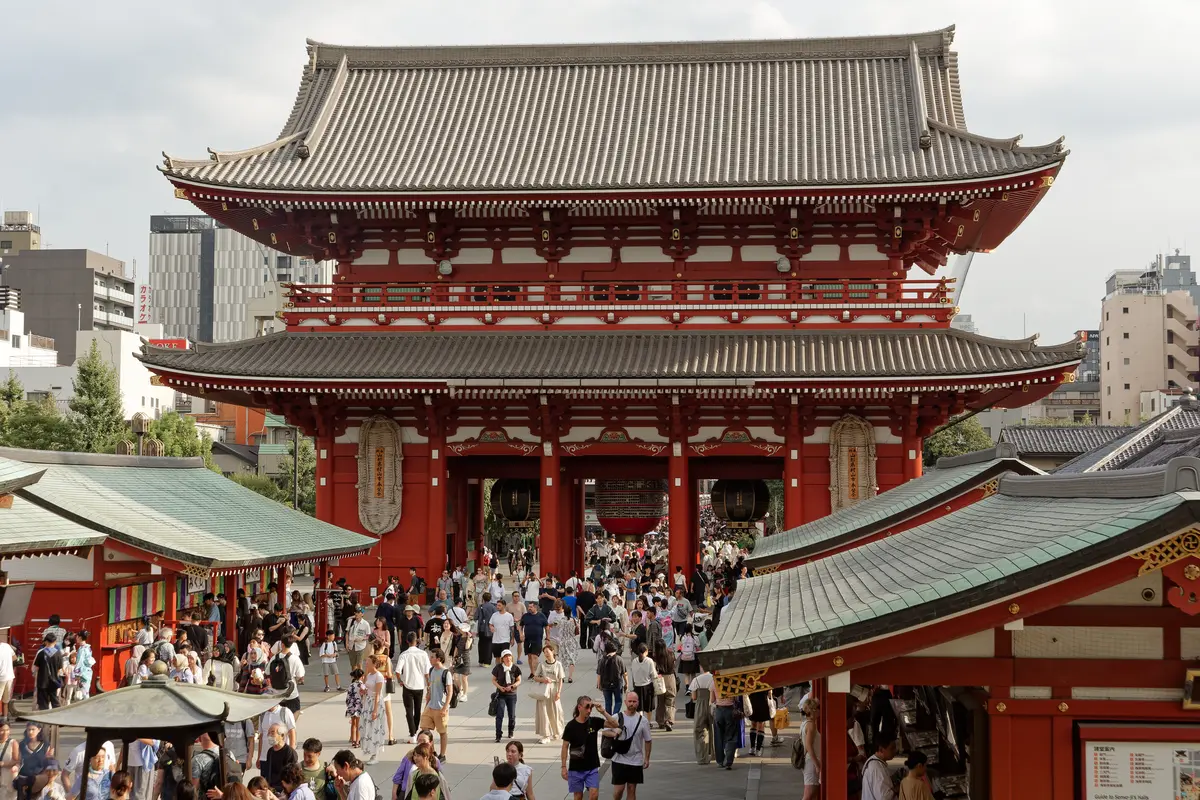
Sensō-ji is Tokyo's oldest-established temple. Its founding legend says two brothers pulled a statue of Kannon from the Sumida River in 628. You enter through the Kaminarimon gate, whose giant lantern is 3.9 metres tall and weighs about 700 kg, then walk Nakamise-dōri to the Hōzōmon gate and the five-storey pagoda. The temple buildings were destroyed in the firebombing of 1945 and rebuilt afterwards; the Kaminarimon you walk through today was dedicated in December 1960. If you visit in May, the Sanja Matsuri, one of Tokyo's three largest Shinto festivals, fills the streets on the third weekend. Hanayashiki, which claims to be Japan's oldest amusement park, is also here.
Read next: A short primer on Japanese dance, and why Asakusa
Earlier or later show?
The booking calendar shows which of the two shows are open on your date, and either makes a great evening. The earlier show leaves the night free, so you can have dinner in Asakusa afterwards, perhaps along Rokku Broadway. The later show works as the finale to a day of sightseeing. The Nakamise stalls close in the late afternoon, so browse them before you head up the stairs, while the main hall and pagoda of Sensō-ji are lit after sunset, which makes a glowing walk before or after the dance. Your confirmation shows the exact time for the option you pick.
Who this isn't for
If anyone in your party cannot manage steep stairs, a ground-floor show will be easier for you. If you want a long classical programme such as a full kabuki play, that is a different evening in another theatre. And if you are hoping for a meal with the show, plan dinner nearby, because the theatre offers a simple menu rather than a full dinner.
Frequently asked questions
How long does the evening last?
The dance runs for about one hour, and you should allow up to two hours in the building. Doors open an hour before the dance, so the time before it is for your drink, the photo booth and meeting the dancers.
What time should I arrive?
Arrive at the time printed on your voucher, not before it. That is when doors open, and the dance begins one hour later. Being inside at least 15 minutes before the show keeps the start smooth.
How do I get to Kaguwa?
Take a train to Asakusa, which is served by the Ginza, Toei Asakusa and Tobu Skytree lines and the Tsukuba Express. Look for the entrance with the lanterns in the covered shopping street and go up to the second floor.
Do I need to understand Japanese?
No. Guests describe a show told through movement and costume, with no spoken language to follow, so the story comes across whatever language you speak.
Is it suitable for children?
Yes, the show can be enjoyed with family or children. Children up to age 5 are free, and you should add an infant reservation when you book. The stairs are steep and there is no lift.
Can I eat at the theatre?
Yes, a simple meal is available separately: pizza, fried chicken and vegetarian snacks made with soy meat. Food and extra drinks are ordered on top of your ticket.
Sources